




Technical Estate Cleanout and Property Liquidation Services
Decades of accumulated density in a multi-generational New England home creates immense structural weight, biohazard risks, and logistical gridlock. We execute heavy-tonnage extraction, MassDEP compliance, and complete property liquidation across MA and RI.
Turnkey Liquidation
Initial sorting to final surface remediation.
MassDEP & RIDEM
Strict state & municipal waste compliance.
Commercial Fleet
High-tonnage extraction & insured crews.
Request Cleanout Assessment
Direct coordination with our field extraction supervisors. Tell us about your property timeline and scope.
Schedule Cleanout Assessment
Direct coordination with our field extraction supervisors.
Structural Extraction and Localized Environmental Challenges
Coastal humidity across Providence, Rhode Island, and southern Massachusetts accelerates the organic decay of cardboard, untreated wood, and textiles stored in unventilated basements and attics. Over years, this trapped moisture leads to advanced material degradation, turning standard household goods into heavy, fused masses of debris.
Mitigating Moisture and Weight Loads in New England Homes
In towns like Westport, Dartmouth, and Narragansett, coastal salt air aggressively attacks metal shelving, fasteners, and heavy appliances, severely compromising their structural integrity. When extracting waterlogged materials from a fieldstone basement in Worcester or a high-humidity attic in Fall River, the dead weight of these items can easily double. Our crews deploy heavy-duty appliance dollies, heavy-gauge rigging straps, and localized bracing to remove thousands of pounds of decaying material up narrow, steep, 19th-century staircases. We prioritize establishing a reinforced load path before moving a single item. This involves laying down high-impact floor protection over original pine or hardwood flooring and securing egress routes to prevent accidental kinetic damage to the property’s interior architecture.
In multi-generational estates, the sheer volume of stored items often masks acute structural issues, such as foundation sheer, failing joists, or active pest infestations. By systematically removing this weight load room by room, we expose these critical areas for structural inspection, halting further degradation of the property.
Speak with our Tri-State Extraction Team
Direct assessment for complex load-bearing and fieldstone basement cleanouts.
Technical Sorting and Material Segregation Workflow
We do not execute blind landfill dumps. To comply with localized waste regulations, our estate clearing process mandates aggressive, on-site material segregation. Every property liquidation is broken down into distinct categories: universally hazardous waste, recyclable metals, restricted construction and demolition (C&D) debris, and general municipal solid waste.
Navigating Strict Municipal Transfer Station Rules
Massachusetts and Rhode Island operate under some of the most rigid waste diversion mandates in the country. The Massachusetts Department of Environmental Protection (MassDEP) strictly enforces waste bans (310 CMR 19.017) prohibiting mattresses, textiles, cathode-ray tubes (CRTs), freon-bearing appliances, and specific C&D materials from standard landfill disposal. Similarly, the Rhode Island Resource Recovery Corporation (RIRRC) in Johnston dictates severe penalties for mixed solid waste loads that contain banned items on the tipping floor.
Our extraction teams pre-sort all payloads directly on the property. We strip freon appliances for specialized processing, isolate mercury-bearing components, and segregate legacy household chemicals—such as lead-based paints and agricultural solvents frequently found in older garages across Raynham, Taunton, and Attleboro. By executing this granular triage on-site, we guarantee zero rejected loads at the transfer station, entirely eliminating the risk of return-load penalties or localized municipal fines being passed onto the estate.

Hoarding Remediation and Biohazard Protocol
Extreme accumulation and hoarding scenarios introduce acute biological and chemical hazards into the extraction environment. Properties left unmaintained for decades often contain animal waste, black mold, decaying organic matter, and airborne particulate hazards. Standard dust masks and basic gloves are entirely insufficient for this level of remediation.
PPE and Airborne Particulate Control
When dispatching crews to heavily impacted properties in Providence, Cranston, or Framingham, we enforce strict personal protective equipment (PPE) protocols. Our technicians utilize half-mask particulate respirators equipped with P100 filters, puncture-resistant tactical footwear, and heavy-duty nitrile-coated Kevlar gloves to defend against hidden sharps and compromised structural materials.
Before shifting heavily decayed organic matter, we assess the environment for concentrated ammonia pockets (from animal urine) and active fungal blooms. Our workflow is methodical: we bag and seal compromised textiles and biological hazards at the point of origin within the home, rather than dragging loose, contaminated debris through clean zones. This containment strategy prevents cross-contamination of airborne spores and foul odors into unaffected sectors of the estate.
Asset Recovery and Property Liquidation Routing
A whole house cleanout frequently uncovers viable assets mixed within the debris. Our segregation protocol isolates high-value items, functional furniture, and intact textiles from the primary waste stream.
Diversion Tactics and Salvage Logistics
For estates in higher-density historical hubs like Newport, Plymouth, and Hingham, liquidating viable assets diverts massive tonnage away from the landfill. We stage functional items into designated salvage zones. Furniture, viable electronics, and clean textiles are prepped for secondary logistics, whether that involves coordinating with local charities, auction houses, or secondary liquidators.
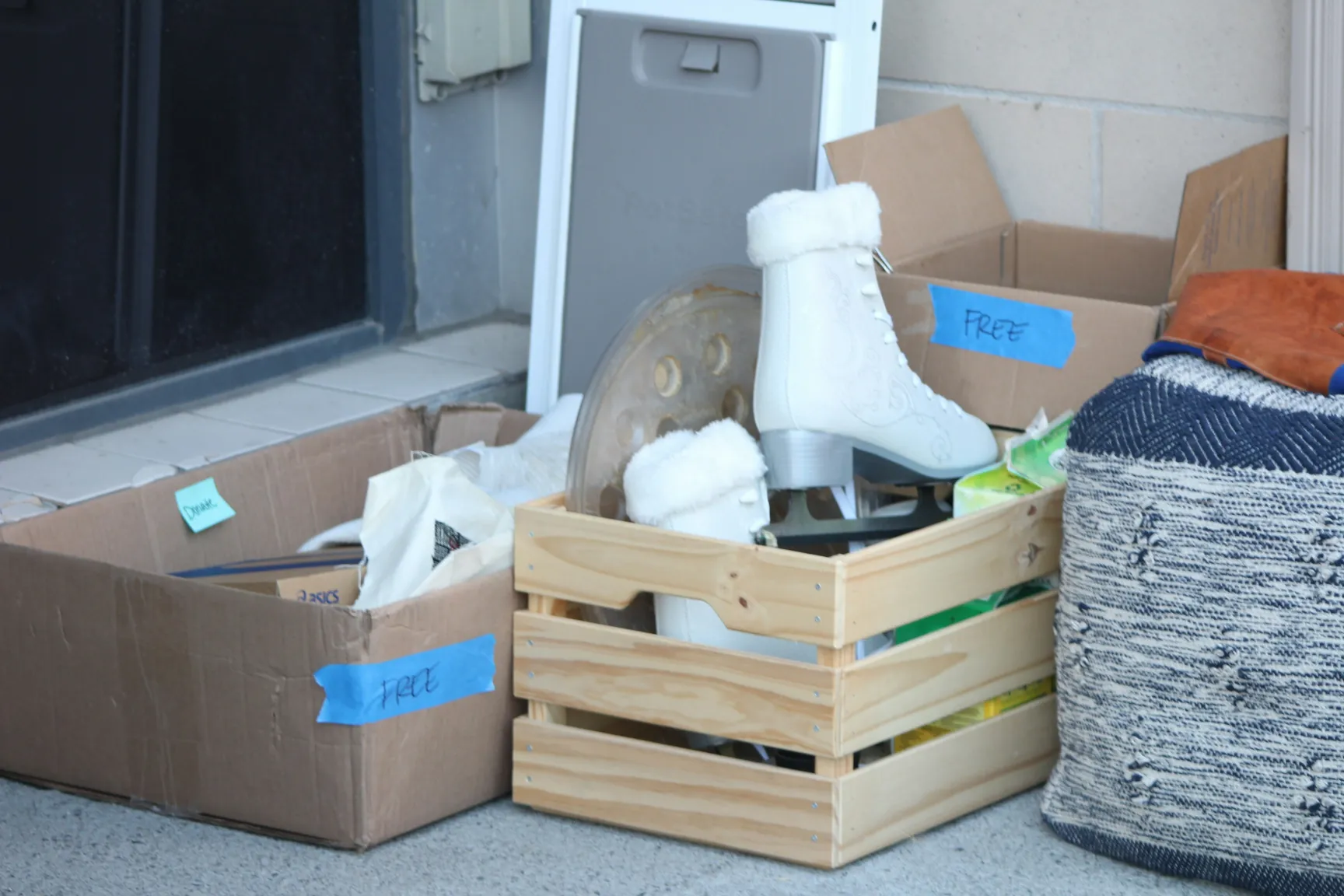
By aggressively stripping the waste stream of salvageable items, we actively reduce the cubic yardage required for dumpsters and commercial hauling trucks. This direct reduction in municipal solid waste tonnage translates directly to a leaner, more cost-effective liquidation process for the estate executors.
Core Equipment and Hauling Capacities
Deploying standard commercial dumpsters onto a 200-year-old cobblestone driveway in Bristol or a fragile asphalt pad in Foxborough invites immediate property damage. The massive point-load of a steel roll-off container, combined with the weight of wet debris and the torque of the delivery truck, will shatter unsupported hardscapes.
Tactical Hauling Mechanics
To prevent driveway destruction, our teams utilize localized staging techniques and specialized hauling vehicles. We deploy heavy-duty floor distribution mats under all staging areas and roll-off contact points to disperse the extreme weight over a wider surface area. Our fleet configurations allow us to position high-capacity hauling trucks in tight residential cul-de-sacs, steep coastal inclines, and densely packed urban streets across New Bedford, Quincy, and Worcester without blocking emergency municipal access.
We execute the physical loading sequence through calculated volumetric packing. Instead of randomly throwing debris into the truck bed, we mechanically break down hollow core doors, crush decaying furniture frames, and strategically stack dense materials at the base of the payload. This engineering maximizes the cubic yardage of every single haul, drastically reducing the number of trips required to clear the property and minimizing the time our heavy equipment sits on your hardscape.
Execution and Immediate On-Site Estimating
Attempting to estimate a multi-ton estate cleanout over the phone yields inaccurate load calculations and hidden fees. Accurate property liquidation requires a direct, physical assessment of the structural load, hazardous material presence, and egress difficulties. We assess the raw volume, identify restricted municipal waste, and calculate the exact kinetic labor required to strip the property down to its base structure.
Call (774) 220-9229 for a transparent, no-obligation on-site estimate today.